
Understanding Fruit Ripening
- Post by: Michael Kwawu
- August 17, 2026
- No Comment
Fruit ripening is a natural, developmentally regulated process that transforms a mature fruit into an attractive, tasty and edible product. During ripening, fruits undergo several biochemical and physiological changes, including changes in color, sugar content, acidity, texture and aroma. These changes determine many of the sensory qualities that make fruits desirable to consumers.
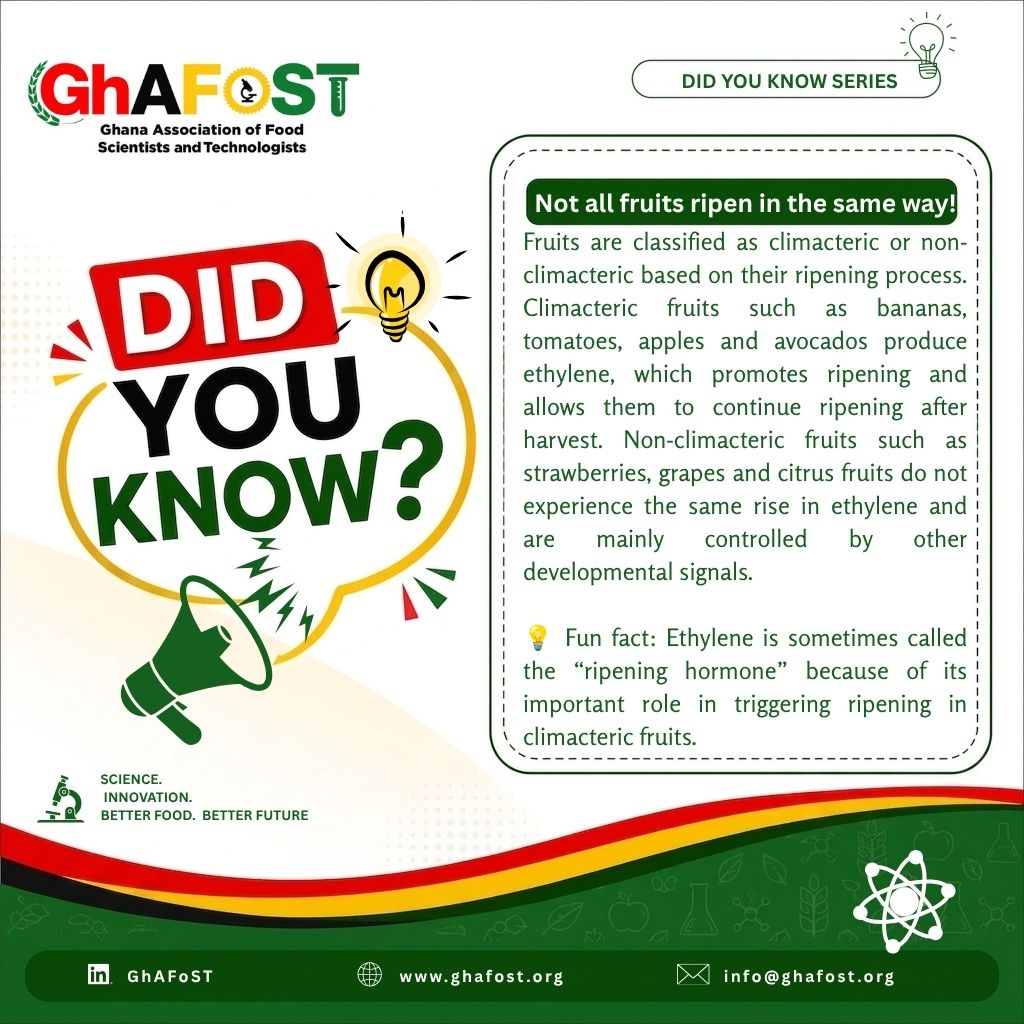
One of the most important substances involved in fruit ripening is ethylene, a naturally occurring plant hormone. However, not all fruits respond to ethylene in the same way. Based on their ripening behavior, fruits are broadly classified as climacteric and non-climacteric fruits.
1. Climacteric Fruits
Climacteric fruits are fruits that experience a marked increase in respiration and ethylene production as they begin to ripen. Ethylene acts as a major signaling molecule that coordinates many of the changes associated with ripening. A special feature of these fruits is autocatalytic ethylene production, meaning that ethylene stimulates the fruit to produce even more ethylene. This creates a positive feedback process that promotes and coordinates ripening.
As ripening progresses, climacteric fruits commonly undergo changes such as softening, color development, increased sweetness, changes in acidity and development of characteristic aromas. Importantly, not every ripening change in climacteric fruits is completely dependent on ethylene; some processes can occur independently of it. Examples of climacteric fruits include:
banana, tomato, apple, pear, peach, avocado, plum and some melons.
This characteristic is important after harvest because some climacteric fruits can continue to ripen after being harvested. Therefore, their exposure to ethylene and storage conditions can influence how quickly they become ripe and eventually over-ripe.
2. Non-Climacteric Fruits
Non-climacteric fruits do not show the characteristic climacteric rise in respiration and autocatalytic ethylene production associated with climacteric fruits. Their ripening is therefore not triggered by ethylene in the same way as climacteric fruits. Instead, ripening appears to depend on other developmental signals and hormones, although some ethylene-dependent processes can still occur.
Non-climacteric fruits generally do not develop the same large ethylene burst that characterizes climacteric fruits. Nevertheless, ethylene may still contribute to specific aspects of ripening in some non-climacteric fruits. Studies reported that ethylene can contribute to color development and other ripening processes in fruits such as grapes, citrus and strawberry. Examples of non-climacteric fruits include: grape, strawberry, citrus fruits and pepper.
Understanding fruit ripening helps farmers, traders, processors and consumers make better decisions about harvesting, transportation, storage and marketing. Controlling ethylene production or its action can slow ripening and help reduce post-harvest deterioration and losses.
Remember: Ripening is not simply a fruit “getting old.” It is a coordinated biological process involving changes in respiration, hormones, genes and biochemical compounds that ultimately produce the color, flavor, aroma and texture we associate with ripe fruit.
Reference: Pech, J.C., Purgatto, E., Bouzayen, M. and Latché, A., 2012. Ethylene and fruit ripening. Annual Plant Reviews Volume 44: The Plant Hormone Ethylene, 44, pp.275-304.